Marion Institute Receives $135,000 State Grant to Power Frogfoot Farm with Solar Energy

WAREHAM, Mass. — The Marion Institute has been awarded a $135,000 grant through the Healey-Driscoll Administration to construct a 17.5 kW solar array at Frogfoot Farm, to help power Frogfoot Farm, the nonprofit’s regenerative farm that grows fresh produce exclusively for local food pantries.

Located on land allocated by the A.D. Makepeace Company on the Plymouth-Wareham town line, Frogfoot Farm harvested nearly 13,000 pounds of fresh produce during its first full growing season in 2025—the equivalent of more than 120,000 servings of nutrient-dense, culturally relevant food distributed to neighbors experiencing food insecurity across Southeastern MA.

The new solar array will provide reliable electrical power to the remote farm site, lowering operating costs while increasing the farm’s long-term resilience and capacity to serve the community.

“This investment is about much more than solar power—it’s about strengthening our ability to nourish our communities for years to come. Reliable, renewable energy allows us to operate Frogfoot Farm more sustainably, reduce operating costs, and reinvest those resources into growing even more fresh, healthy food for our neighbors. We are deeply grateful to the Healey-Driscoll Administration and the A.D. Makepeace Company for believing in this vision and helping us build a more resilient regional food system,” said Liz Wiley, Executive Director of the Marion Institute.

James F. Kane, President and Chief Executive Officer of the A.D. Makepeace Company, noted that providing power to the site had previously required generators.

“Since we initiated this partnership in 2023, we have worked together on incremental improvements that will ultimately benefit the less fortunate of our communities,” Mr. Kane said.

The solar array is expected to save the Marion Institute approximately $5,000 annually in electricity costs. The Marion Institute’s award was one of 10 grants announced this week through the Healey-Driscoll Administration’s Low-Income Solar Incentive Program.

“We are thrilled to award grants to this latest group of nonprofit organizations and add more than 600 kW of new solar energy to Massachusetts,” said Energy Resources Commissioner Elizabeth Mahony. “Together, these organizations will pay almost $275,000 less in electricity costs each year, providing more financial resources for their important missions. The solar systems LISSP enables benefit communities by helping local organizations reach more people, and with cleaner air and improved public health.”

Reliable electrical service will power essential farm infrastructure, including irrigation, wash and pack equipment, greenhouse, lighting, and future operational needs. The investment strengthens Frogfoot Farm’s capacity to grow, harvest, and distribute fresh produce while advancing the Marion Institute’s commitment to regenerative agriculture and long-term sustainability.

The A.D. Makepeace Company’s partnership provides the land for Frogfoot Farm, along with significant soil improvements and irrigation infrastructure, creating the foundation for a farm dedicated to expanding access to fresh, locally grown food through regenerative agricultural practices.

Frogfoot Farm is a program of the Marion Institute’s broader mission to expand food access, improve community health, and strengthen the connections between local farms and the families they serve. Through regenerative farming practices, volunteer engagement, and partnerships across Southeastern Massachusetts, the farm grows fresh produce exclusively for food relief organizations serving local communities.

About the Marion Institute

The Marion Institute believes that food is a powerful connector and the foundation of health. Through partnerships, education, and community engagement, we are strengthening our local food system to ensure all people can access and enjoy health-promoting food. To learn more, visit: marioninstitute.org.

About A.D. Makepeace:
Founded 172 years ago, the A.D. Makepeace Company is the developer of the award-winning Redbrook community, North America’s largest cranberry grower, and a recognized leader in environmentally responsible real estate development and land stewardship. For more information, visit admakepeace.com.
Learn About The Cranberry Industry at Abel’s Place

In the 1850s, Abel Denison Makepeace began building the company that would earn him the moniker, “The Cranberry King.” According to the Barnstable County History published in 1890, Mr. Makepeace was “recognized by all New England as the foremost man in the cranberry business.”

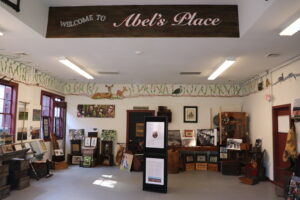
Today, on the grounds of the company that still bears his name, a self-guided museum depicting the history and artifacts of the cranberry industry has taken root.

Dubbed “Abel’s Place,” the display is housed in a room of what was once used as a machine shop, built by Mr. Makepeace in the early 1900s.

“We saw this as a way to recognize the family legacy and introduce the general public to the details of the cranberry industry,” said Christopher Makepeace, a fourth-generation descendent of Abel Makepeace and a member of the A.D. Makepeace Company Board of Directors.

The display is arranged by season, tied together by a mural designed and painted by Christina Antoniou of Kingston, then a college student majoring in fine arts. Here, visitors can view how maintenance in the winter and spring, blossoms and pollination in the summer, and of course the picturesque fall cranberry harvest has changed over the years.

“Whether you grew up in the industry and know some of the people shown in the old photos, or are new to cranberries but are interested in history, innovation, agriculture, or new technology, you will find this fascinating,” said James F. Kane, current president and chief executive officer of the A.D. Makepeace Company.

Among the artifacts in the building are wooden cranberry scoops and boxes, a sorting machine, and a display of some original products from the Ocean Spray co-op, of which the A.D. Makepeace Company was a founding member in 1930.

“It’s so perfect to pop into with kids, or with anybody,” said Brittany Anne Burgess of Wareham, a social media guide, following a recent visit. “Honestly, this feels like one of those hidden gems that even people from Massachusetts don’t always know about.”

Abel’s Place is located at 146 Tihonet Road, Wareham. It is free and open to the public from 10 a.m. to 3 p.m. Tuesday through Saturday, or by appointment. The regular business hours coincide with those of Makepeace Farms, the cafe and gift shop located next door.

ADM To Continue Hosting Blood Drives

Makepeace Red Cross Blood DriveWAREHAM – The A.D. Makepeace Company will continue to host monthly blood drives at Rosebrook in 2026.
According to the American Red Cross, ADM’s 2025 drives resulted in donations of 261 units of blood.

The company has been hosting the drives, in conjunction with the Red Cross, since the early days of the Covid-19 pandemic.

“We saw this as one small way we could help in the middle of a public health crisis,” said James Kane, president and chief executive officer of the A.D. Makepeace Company. “Today, the need is as urgent as ever. We are grateful to the ADM employees and other local residents who take the time to donate blood at Rosebrook.”

Find dates of the upcoming drives and schedule an appointment at redcrossblood.org. The blood drives are held at the Rosebrook Event Center, 50 Rosebrook Place, Wareham.

The 172-year-old A.D. Makepeace Company is developer of the award-winning Redbrook, North America’s largest cranberry grower, the largest private property owner in eastern Massachusetts, and a recognized leader in environmentally responsible real estate development and stewardship. Visit admakepeace.com for more information.

Cranberry Month Proclaimed at ADM Bog

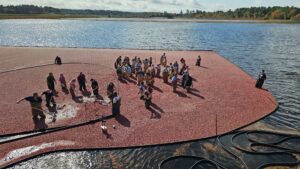
Governor Maura Healey and Lieutenant Governor Kim Driscoll have officially declared October as Massachusetts Cranberry Month to celebrate the state’s cranberry industry.

The announcement was made by Massachusetts Department of Agriculture Commissioner Ashley Randle during a visit to A.D. Makepeace Company’s Cranebrook Cranberry Bog, attended by state officials, cranberry growers, and other stakeholders.

A press release from the governor’s office highlights the economic, environmental, and cultural importance of cranberries in Massachusetts, noting:

    • Over 11,500 acres of commercial cranberry bogs.
    • More than 6,400 jobs and $1.7 billion in economic activity.
    • Over 60,000 acres of open space maintained by growers.

“We recognize the cranberry as an important and historic crop to Massachusetts,” said Governor Maura Healey. “Our official state berry has cemented itself at the dinner table as a mandatory staple during Thanksgiving, and the cranberry growing industry has long been recognized as innovators in agriculture, overcoming challenges and utilizing unique practices to ensure a thriving sector in Massachusetts.”

View the release here.

UMass Cranberry Station Gets a Helping Hand from ADM

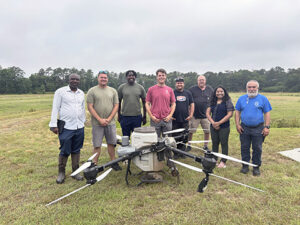
WAREHAM – The A.D. Makepeace Company cranberry team this week provided aerial support to the UMass Cranberry Station by applying fertilizer on its research bogs via drone, a game-changing tool bringing new efficiency to farming.

This innovative approach offers significant advantages over traditional ground-based application methods. Not only is it more time-efficient, but it also provides a uniform distribution of fertilizer across the entire bog surface, enhancing consistency and crop health.

The ADM team completed the 10.5-acre application in less than an hour. Using their traditional hand-application method, the task would have taken the research team twice as long and required a crew of at least three people.

“It was a pleasure to collaborate with our research partners and showcase how drone technology can streamline operations, improve crop health, and significantly save time,” said James F. Kane, president and chief executive officer of the A.D. Makepeace Company. “Working together with industry partners like the UMass Cranberry Station helps strengthen our agricultural community and advance innovative solutions across the industry.”

The Cranberry Station, located in East Wareham, is a part of the University of Massachusetts at Amherst. Its mission is to maintain and enhance the economic viability of the Massachusetts cranberry industry through research and outreach, and to serve the public welfare by supporting economic development and protection of the environment.

The 171-year-old A.D. Makepeace Company is North America’s largest cranberry grower, the largest private property owner in eastern Massachusetts, and a recognized leader in environmentally responsible real estate development and stewardship. Visit admakepeace.com for more information.

ADM and Junior Associates Partner To Benefit Bluebirds

WAREHAM – The A.D. Makepeace Company (ADM) teamed up with the Junior Associates of the Wankinquoah Rod & Gun Club in Middleboro to enhance bird habitats around the company’s cranberry bogs.

Charlie Murphy, Junior Associates Advisor, and Gavin Bartlett, Assistant General Manager of Cranberry Operations at ADM, worked with over 30 Junior Associates and their advisors to build and decorate 45 bluebird boxes and 10 woodcock boxes, all while learning about the essential role birds play in agriculture – particularly their natural ability to control insect populations.

On April 6, the Junior Associates and their advisors returned to ADM to install 10 bluebird boxes around the Marsh Bogs, which provide a scenic natural backdrop to the luxury apartments at 35 Rosebrook.

The remaining boxes were placed along the perimeter of Frogfoot Farm – Neighbors Feeding Neighbors. A program of the Marion Institute hosted by ADM, Frogfoot Farm is strengthening local food systems and addressing nutrition insecurity by providing fresh produce to neighbors in need.

The Junior Associates are also preparing for their largest annual fundraiser, the Tihonet Pond Fishing Derby, which takes place on the ADM campus. Registration is available online at www.TIHONETDERBY25.eventbrite.com.

The Wankinquoah Rod & Gun Club, located in Middleborough, was established in 1927 by a group of sportsmen “to encourage and engage in the sports of hunting, fishing and boating and all social activities connected therewith.” The club owns more than 300 acres of land and operates as a state-of-the-art clubhouse with indoor firearm and archery ranges, and a newly renovated outdoor range. The club offers youth and adult programming.

The 170-year-old A.D. Makepeace Company is North America’s largest cranberry grower, the largest private property owner in eastern Massachusetts, and a recognized leader in environmentally responsible real estate development and stewardship. Visit admakepeace.com for more information.

ADM Plans Affordable Housing For Rosebrook

WAREHAM, MA – The A.D. Makepeace Company has proposed development of a 180-unit rental project at its Rosebrook Business Park property.

The two four-story buildings have been designed to be compatible with its neighbors, the existing 100 Rosebrook medical office building housing Southcoast Health, and the All American Assisted Living complex. The apartments will have views of expansive cranberry bogs to the north.

Preliminary plans show 135 market-rate apartments, and 45 apartments that will be income-restricted in perpetuity and made available to households with an income at or below 80 percent of the area median income. Thirty-one of the affordable units could have a local preference.

The project, known as 200 Rosebrook, will most likely put the Town of Wareham above the state-mandated goal of 10 percent affordable housing. This means the Chapter 40B regulations, which relax local zoning requirements for affordable housing projects and lessens a town’s ability to restrict or reject such plans, will be satisfied.

“This is the perfect location for such a development,” said James Kane, president and chief executive officer of the A.D. Makepeace Company. “It’s close to shops and services, public transportation, and hundreds of jobs, while also in a beautiful natural setting that is development ready, with infrastructure in place.”

When ADM began construction of Rosebrook in 2011, the company built roads and utility infrastructure that will more than accommodate the proposed housing.

MassHousing, a quasi-public state agency, issued a project eligibility letter on December 11, 2024, determining that 200 Rosebrook meets state standards regarding income restrictions, unit size and configuration, and other details. Therefore, the project is now eligible to apply for a comprehensive permit from the Wareham Zoning Board of Appeals.

The ZBA has scheduled a public hearing on the project for March 26 at 6 p.m.

Mr. Kane said company representatives have met informally with local officials, to keep them informed. All agree that Massachusetts is facing a housing shortage and this project will meet many of the town and state goals for housing production.

“It is particularly beneficial to the town that this project helps meet affordable housing needs while potentially removing the threat of an ‘unfriendly’ 40B project that neighbors do not like,” Mr. Kane said. He noted that aside from the residents of the existing apartments at 35 Rosebrook and the All-American Assisted Living residents, there are no residential neighbors.

The 170-year-old A.D. Makepeace Company is the developer of Rosebrook Place and Rosebrook Business Park and the award-winning Redbrook, North America’s largest cranberry grower, and a recognized leader in environmentally responsible real estate development and stewardship. Visit admakepeace.com for more information.

Healey-Driscoll Administration Visits Redbrook to Announce $158 Million for New Affordable Housing

PLYMOUTH — Today, the Healey-Driscoll Administration announced $158 million in low-income housing tax credit and subsidy awards for 14 affordable housing projects across the state. These awards will support the production and preservation of 1,138 affordable units for seniors and families across the state. These awards were made possible in part by the $1 billion tax relief bill signed by Governor Maura Healey in 2023, which raised the Low-Income Housing Tax Credit to $60 million annually, a $20 million increase that allows the state to support more affordable housing production.

“High housing costs are one of the biggest challenges facing Massachusetts residents. Our administration is refusing to kick the can down the road. We need to increase housing production across the state to lower costs – and these affordable housing awards will help us get there,” said Governor Maura Healey. “Because of our tax cuts package, we’re able to give out more funding than ever before, which will directly support the creation of more than 1,000 affordable homes for seniors and families across our state.”

“Every dollar we’re delivering to developers and communities directly translates into new, affordable homes for residents across our state,” said Lieutenant Governor Kim Driscoll. “It’s great to be in Plymouth today to see how they are embracing the incredible benefits that new housing brings and delivering a great place to call home for hundreds of seniors. We’re excited to see how these awards will get shovels in ground for Cranberry Commons and housing projects across the state.”

On Thursday, Governor Healey, Lieutenant Governor Driscoll, Secretary Augustus and local officials visited the Redbrook community in Plymouth, where The Grantham Group will be building Cranberry Commons with the support of one of the awards. When completed, Cranberry Commons will offer 62 total units, all of which will be affordable for seniors.

“The Healey-Driscoll Administration’s is working hard not only to expand affordable housing opportunities across the Commonwealth but also to preserve our rich history through the restoration and adaptive reuse of historic buildings for housing,” said Ed Augustus, Secretary of Housing and Livable Communities. “The 14 projects being awarded today represent another strong step forward to drive down housing costs and will foster stronger communities for years to come.”

“The Town of Plymouth appreciates the Healey-Driscoll administration’s ongoing dedication to affordable housing,” said Plymouth Town Manager Derek Brindisi. “This award reinforces the Town’s commitment to expanding affordable housing options for our residents.”

Projects include new senior developments, a deep energy retrofit, and the adaptive reuse of an old mill being converted into housing. A total of 95 percent of units will be affordable to seniors or families earning less than 60 percent of AMI. At least 327 units will be deeply affordable and restricted to individuals or families earning less than 30 percent of AMI.

Redbrook Water System Honored

BOSTON – In honor of National Drinking Water Week, the Massachusetts Department of Environmental Protection (MassDEP) announced today that 45 public water systems, four certified operators, and one childcare center have received awards for their noteworthy performance during 2023. Awardees demonstrated excellent water service to the public, no violations or compliance issues, and efforts that support overall public water supply service.

Among those honored was Agawam Springs Water Company, a subsidiary of the A.D. Makepeace Company which provides water to the residents of Redbrook.

“Water is our most valuable natural resource, and it takes the work of experienced professions to protect it from pollution, promote conservation, and build infrastructure to handle our future needs,” said Energy and Environmental Affairs Secretary Rebecca Tepper. “National Drinking Water Week is the perfect time to honor these dedicated water suppliers and professionals who work every day to supply clean, safe, and healthy drinking water to millions of residents across Massachusetts.”

“Clean and sufficient drinking water doesn’t happen by accident. It’s because of the hard work of people like those being recognized today,” said MassDEP Commissioner Bonnie Heiple. “I’m honored to publicly commend these water systems and operators for their exceptional service and distinguished work protecting the health of their communities.”

For 38 years, MassDEP has recognized and awarded exemplary systems that have reached meritorious service for their work during the previous calendar year. Today’s public ceremony honoring the 2024 award recipients was held at the Devens Community Center in Devens, MA.

Read more here.

A.D. Makepeace Companies, Redbrook To Celebrate Earth Day By Planting “Tiny Forest”

PLYMOUTH – To celebrate Earth Day 2024, the A.D. Makepeace Companies, in coordination with Sustainable Redbrook, today announced the creation of a Miyawaki Forest at Redbrook. Commonly referred to as a pocket forest or tiny forest, the effort will bring more than 300 native plants to the River Run Way entrance of Redbrook. The forest planted at Redbrook will be the first Miyawaki Forest in the southeastern part of Massachusetts.

The Miyawaki Forest concept focuses on planting biodiverse, native, pocket-sized forests that lead to cooling, increased biodiversity, and carbon sequestration, among other benefits. The forests are typically installed in urban areas, with at least eight already growing or planned in Massachusetts, ranging from 1,100 square feet to 4,300 square feet.

The A.D. Makepeace Company’s Read Custom Soils (RCS) division will partner with the Redbrook Community to use the site as a pilot project for evaluating various types of engineered soils that best help the forests sequester carbon, provide tree canopy, and deliver habitat and environmental benefits. The project will be open to Redbrook residents, interested landscape architects, climate resiliency scientists, and interested members of the public to visit and engage.

Sustainable Redbrook, a group of Redbrook residents, identified the site at the entry to the community as an ideal location to showcase the project.  Members of Sustainable Redbrook and Redbrook staff walked the site and refined the plan.  Their involvement will continue with maintenance and documentation of the forest.

“Something that Redbrook residents have in common is a sophisticated understanding of environmental issues and concern for the planet,” said Dan Gorczyca, project executive for Redbrook. “This will be a great opportunity for all of us to watch the forest grow and be part of its success.”

Site work is expected to begin this spring. The first step is to tree-spade some trees already existing on site, which Project Manager Evan Miller, RLA ASLA, said will be transplanted to the new Redbrook Square property.

Next, two feet of compacted soils at the River Run Way site, home of the Redbrook sales trailer before the Meeting House was constructed, will be removed and replaced with the RCS’s proprietary Miyawaki Forest Planting Soil. The blend includes coarse sand, natural base loam, mature leaf compost, biochar and a mycorrhizal fungi inoculant.  After planting, an additional four to six inches of RCS Miyawaki Forest Floor Layer will be placed over the soil and around the 350 new plantings in the 2,000-square-foot space. Though small at the time of planting, these densely planted young whips simulate the layers of a natural forest and allow for rapid growth of tree species, sub species, shrubs, and groundcover and can help to create a forest in just 20 to 30 years.

“We see this as a way for municipal officials and landscape professionals to see how a Miyawaki Forest could work in their own community,” said Jim Kane, president and chief executive officer of the A.D. Makepeace Company. “In an urban setting, it can mitigate heat islands, provide a habitat for beneficial insects and pollinators, and beautify a neighborhood.”

The tiny forest method thrives best when many native plants are introduced to an area that has been properly prepared, thus allowing the plants to grow quickly, with a canopy layer reaching mature height and shading smaller trees and shrubs. This site will allow visitors to walk through this emerging ecosystem and compare its growth with the neighboring established native pine barrens forest.

“Sustainable Redbrook embraces the Miyawaki tiny forest concept and looks forward to assisting in the installation and maintenance of this exciting project,” the organization said in a prepared statement. “Not only will our Redbrook Pollinator Pathway be further enhanced due to the Miyawaki Forest biodiversity, but this project will also help to create a greener and healthier future for our Redbrook community while providing a warm and inviting welcome for all who visit Redbrook every day.”

The A.D. Makepeace Company is evaluating area sites for another similar installation.

The 169-year-old A.D. Makepeace Company is developer of the award-winning Redbrook, North America’s largest cranberry grower, the largest private property owner in eastern Massachusetts, and a recognized leader in environmentally responsible real estate development and stewardship. Visit admakepeace.com for more information.